Shiloh
Meeting House & Cemetery
|
||||||||||||||||||||||||||||||||||||||||||||||||||||||||||||
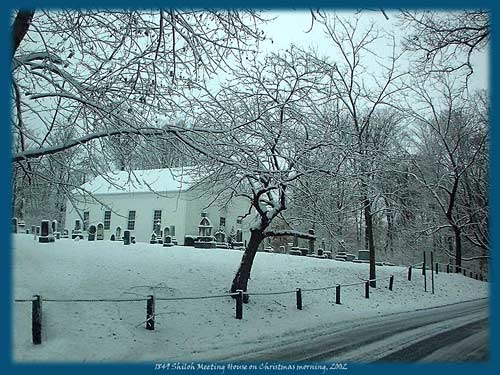
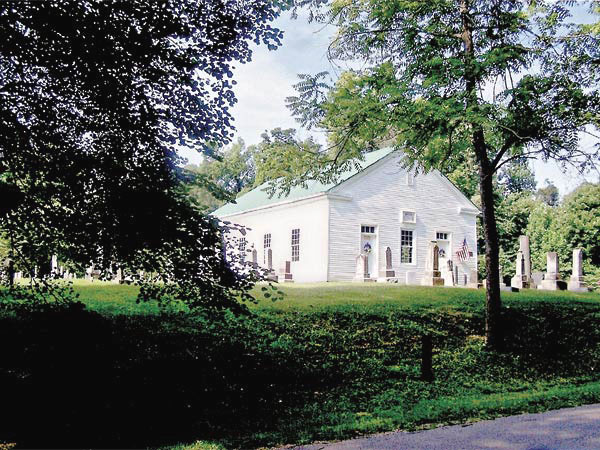
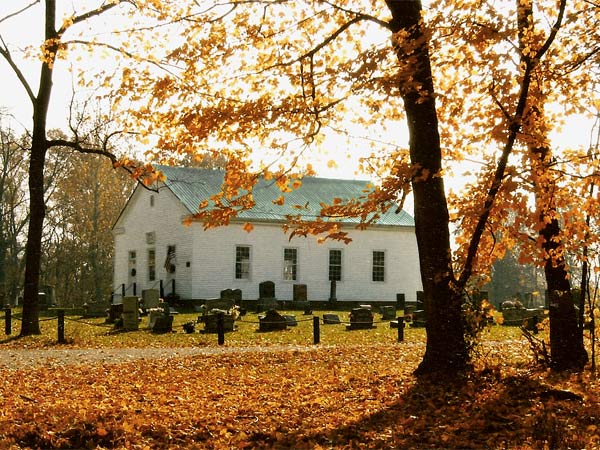
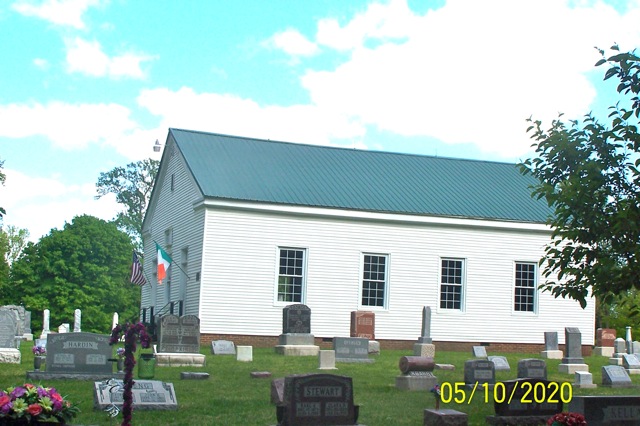
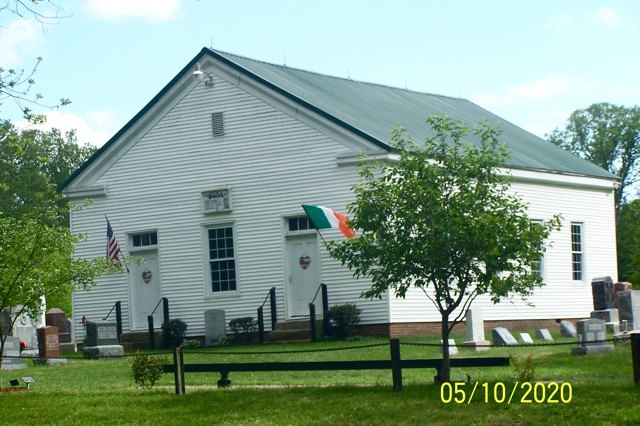
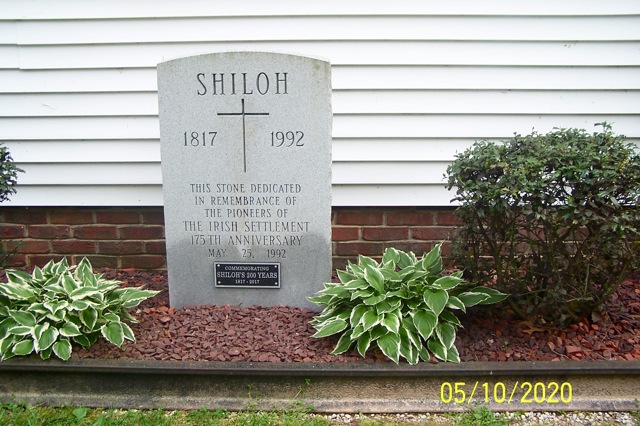
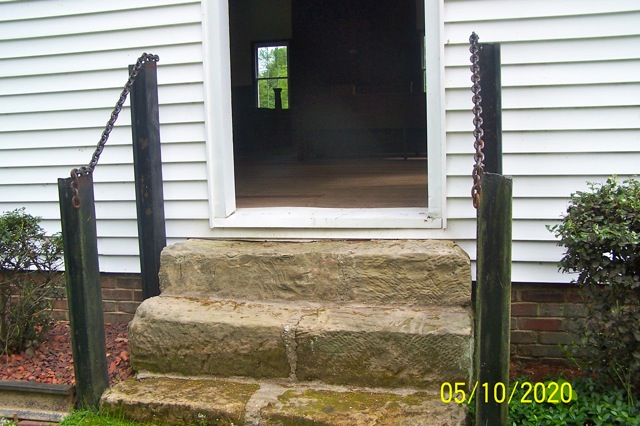
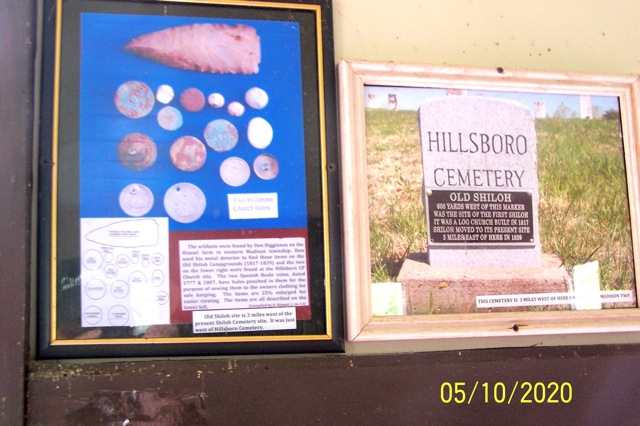
The first Shiloh was on the west edge of the Irish Settlement.They began holding religious services in a log church in 1817.This log Cumberland Presbyterian Church was six hundred yards southwest of the present Hillsboro Cemetery. Artifacts of the church have been found at this site to prove its location. Church services and campgrounds were at this site until 1839 when Shiloh moved to its present site. This location is about a mile and a half southeast of Ireland and two and one half miles west of Jasper. Click here for directions and map. Camp meetings and religious services continued. Here a new set of log camps was built. With the exception of the camp of Robert Dickson, all camps were but one story. Dickson's camp was a two story building, which stood at the southeast corner of the four rows of camp buildings. Among others having camps were: Thomas Payne, James Stewart, Madison Armstrong, David Anderson, Andrew Anderson, John Shandy, Andrew Morgan, Andrew Kelso, Louis Green, Samuel Dillin, Sr., Mordecia Hopkins and many others. Among the ministers who conducted the meetings at the two campgrounds were Reverends William Harris, Alexander Chapman, John Barnett, William Barnett, Finis Ewing, Dr. James Johnson, John M. Berry, Aaron Shelby, David Lowry, Henry Delaney, Hiram Hunter, William Lynn, Thomas Porter, William Long, Alexander Downey and James Ritchey, Sr. The camp meetings, as they were known in the early days, came to an end when the 1849 Shiloh Meeting House was erected. James Stewart was head carpenter for the building of the meeting house. All the lumber was sawed by water power, but the weather boarding and the finishing lumber was hand planed. At the time it was built and for many years afterwards, Shiloh was known as one of the finest country churches in the southern part of the state. The name Shiloh is a Hebrew word meaning "a quiet place". It is found frequently in the Bible and is a favorite church name among all denominations. Church Services were held on the first Sunday of the month. Reverand A.J. Strain served as the first minister of Shiloh. He served for 26 years. During his tenure, the Shiloh Cemetery was begun. Rev. E. E. Banta (Bonta) was also one of the early ministers. The first burial was that of Miss Minerva Edmondson in 1860. Carter Reynolds, March 28, 1861, was the second burial. Jane Stewart, who died April 3, 1861, was buried in the third grave. The first soldiers to be buried at Shiloh were Madison and Ashier Greene, sons of Thomas and Eliza Greene. Madison and Ashier died during the Civil War. They died in the battle of Shiloh in Corinth, Mississippi. They were brought back and buried in the same grave. A list of all known burials in the cemetery is on this website. The first hearse seen in Ireland was used for the funeral of Joanna Dillin in 1868. Prior to the year 1888, all burials were made in wood coffins. At that time, Isaac Alexander, Ireland undertaker, brought two metal caskets to his establishment. The first person buried at Shiloh in such a casket was Mrs. Phillip (Sadie) Wineinger in 1889. Rev. A. J. Strain served as many as 10 churches in the area. His means of transportation was his horse. During a week of many rains, he became sick. Rev. Strain developed double pneumonia. He died on February 2, 1873. It is documented in the Jasper Courier, that over 1500 people attended the funeral. The people met in Ireland and followed the procession to Shiloh where he was buried. It is believed Rev. Strain's influence in educational and religious circles was probably greater than that of any other pioneer in Dubois County. The rural graveyards of indiana are full of the honest, sincere, truthful, loving, God fearing pioneers. They were indeed the salt of the earth. The remains of many of the most prominent pioneer families associated with Jasper and the Irish Settlement are at rest at Shiloh. It is the sacred duty of the present and of the future generations to improve, preserve and beautify this hallowed spot. These pioneers leave with us the lesson that it is not necessary for people to live in marble halls and speak a language of perfection to have richness of character and hearts that are warm and true. With the passing of Rev. Strain came the passing of regular services at Shiloh. Services continured to be held at Shiloh more or less regularly until September of 1885. The congregation had built a new Presbyterian church in the town of Ireland. With the congregation moving to Ireland, the cemetery and building did not receive the attention it deserved. It was not until September of 1927, that this problem was resolved. It was then that the official name of The Shiloh Cemetery Association of Ireland, Indiana, Inc. was given and the association was formed. The association was and still is comprised of a board of directors and a slate of officers. The board set out to beautify and restore the meeting house and cemetery. The cemetery has been maintained throughout the years and remains in excellent shape. In the Shiloh bylaws it states that the cemetery is open at all times for the burial of the dead, irrespective, of faith, sect or denomination, for the use and benefit of the general public. Shiloh is a public cemetery and may be used by all beliefs and denominations. Also, if you wish to have a "Pioneer Wedding" at the 1849 Shiloh Meeting House, email slatkv@aol.com to get the details or for any other questions about the cemetery or email junebug@fullnet.com as well.
The first board of directors included: Earl Stewart, President, Theodore Glezen, Vice-President and Dr. Eugene Norman, Secretary/Treasurer. These gentlemen were elected on January 2, 1928. They voted to meet the first Tuesday night of each month at 7:30pm at the law office of Horace M. Kean in Jasper, Indiana. After meeting for 6 straight months, it was found that the board had progressed the restoration of the church and grounds sufficently that the board voted to meet twice a year or upon call by the President. Since the beginning of Shiloh in 1817, Shiloh has held an annual event to honor the dead and especially the veterans. During the second meeting of the board, it was decided to continue an annual Gathering on Memorial Day. This tradition holds true yet today. Presently, the secretary sends out over 400 letters to 29 states giving notice each year of the annual event. The Gatherings draw about 130 persons each year. The event is held on the Memorial Day week-end Sunday at the Shiloh Meeting House. The event begins at 1 pm EDT. with a one hour program. Desserts are served following the program, please bring your own drinks. If you wish to remember Shiloh with a donation: please send it to, Shiloh, 5498 Division Road, Jasper, IN 47546. Also, please tell other interested "Friends of Shiloh" about this website. If you are interested in having an annual newsletter, please e-mail slatkv@aol.com or junebug@fullnet.com and we'll put you on the mailing list. The annual report of programs has been discontinued. Shiloh 2020: Due to the Conora 19 Virus our 203rd annual meeting can be held individually-we suggest zooming phone calls among the people who wish to do so. Our tradition will be carried on this way. Scroll to the bottom of this page for some pictures taken on May 10, 2020 to help those who wish to visit Shiloh through these pictures. See you next year. Shiloh 2019: For the 202nd consecutive year Shiloh held it's annual meeting. This meeting, for the first time was held on a Saturday. The event was well attended. After a recognition session of honoring our veterans, emts, firefighters and law enforcement individuals the meeting proceeded. Ed Ewing, who has over 350 relatives buried in Shiloh, gave a short talk on what Shiloh means to him . Also he told of his vivid early rememberances of Shiloh. The Weyer girls (seven sisters) from St. Anthony, Indiana gave us an excellent singing performance. Fellowship and a dessert festival followed. The annual meeting for 2020 will be held on the 22nd or 29th of May. A newsletter will be sent to give the exact date- time is always 1:30 local time. Shiloh 2018: The program was dedicated to MaryAlice Parks who passed away on March 19,2018. MaryAlice's funeral service was held in the Meeting House on the 21st of March. MaryAlice was Secretary of the board for many years. She was a large benifactor to the Association. The program began at 1:30 on May 27with new President Steve Lindauer in charge. MayAlice's nieces were at the program to find closure in their Aunt's death. TheWeyer sisters provided a great program of singing. In the September 2018 board meeting it was voted to have the annual Gathering on a Saturday-so in 2019 it will be held on May 25th at the Meeting House at 1:30pm local time. As always a dessert festival will be enjoyed after the program. Shiloh 2017: This is our Bicentennial 200th year of existance.. The 200th meeting of Shiloh was held on May 28 at 1:30 pm EDT. ShashaWright from California and Tom Miller of St. Mary church in Ireland were the vocalists. Scott Himsel, Wabash College's law professor, wasthe speaker. The Jasper Presbyterian church was present. During our Bicentennial year it was only fitting that Shiloh could buy the acreage that joins Shiloh on the west. This wooded acreage will keep Shiloh surrounded by woods for the ages. A dessert festival was held after the Gathering. The public was invited. Shiloh 2016: On May 29, 2016, Shiloh had its 199th annual meeting at 1:30 pm EDT. The Gathering has an Irish Seanchai (Shauna-T) as their guest speaker, direct from Ireland. The music was led by Scott Himsel. The meeting was slanted somewhat on Ireland Indiana's Bicentennial celebrationt hat was from August 26-28 in Ireland Indiana. A "dessert festival" was held after the meeting. The public was invited.
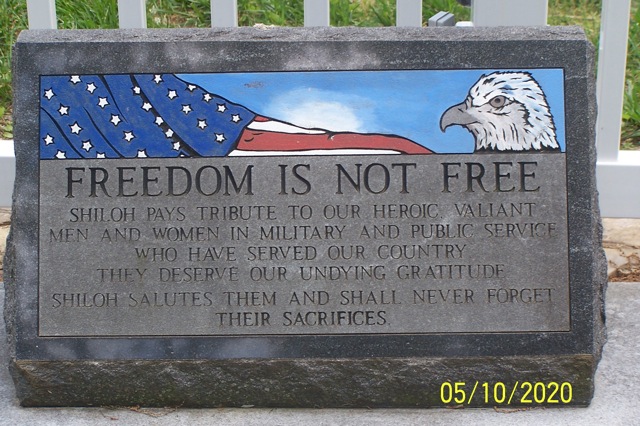
Shiloh 2015; On May 24, 2015 at 1:00 pm EDT, Shiloh had its 198th annual meeting. The meeting we had asour guest speaker Rev. Larry Van Camp. Rev. Larry is the minister of the local Shiloh United Methodist Church. The music was provided by Shiloh. Courtney Hebbrer, the church choir director, is in charge of the music. A Dessert Festival was held after the meeting. Shiloh 2013: On May 26, 2013 at 1:30 pm EDT, Shiloh had its 196th annual meeting. The meeting featured The Red Bank ReUnion Band of Evansville, Indiana. The band features mid 1800s music using authentic music and Civil War period instruments. The band is the only band of its type in Indiana A Dessert Festival was held immeadiately after the meeting. Shiloh 2012: On May 27, 2012 at 1:30 pm EDT, Shiloh had its 195th annual meeting since it began. Musical and singing entertainment was provided by the St. John the Baptist Catholic Church Folk Choir from Vincenness, Indiana who performed its talents for us. Also 99 year and 11 month old Ariel Green told of her childhood days while being raised in the rural Ireland area. A special recognition to the Rose family was noted. Ariel is a member of the Clan Rose which originates in Scotland. More Clan Rose members were also present. A Dessert Festival was held after the meeting. Shiloh 2011: On May 29, 2011 Shiloh had its annual Gathering at the Shiloh Meeting House beginning at 1PM EDT. The Gathering had music provided by "Roger Craig and Friends" from the Otwell area. The program was conducted by the Marine Corps League, " Southern Indiana Leathernecks", detachment #931. This fine military group told the history of this group, go to: www.sildmarines.com or e-mail: slatkv@aol.com for some of the history and events of this group. Another feature of the group was their color guard who will help dedicate our Military and Public Service Memorial Stone. Also a Bag-Piper was present playing Taps. Steve Lindauer is the organizations Public Affairs Officer. We also had our Dessert Festival after the meeting. May 30, 2010, Shiloh had their annual Gathering in honor of the veterans and those who have go on before. This was the 193rd. year in which a meeting has been held at Shiloh. The Gathering was at the Shiloh Meeting House beginning at 1pm EDT. The program featured THE CELEBRATION SINGERS. The singers were the idea of Larry Feldmeyer of Huntingburg. The group is from Pike, Spencer and Dubois Counties and was formed in 2002. There are more than 70 singers in the group. Over 150 people came to enjoy the program they presened .
The 2009 program contents were as follows. We had an excellent speaker on the life and times of Abraham Linclon. Scott Himsel, an attorney for Baker/Daniels of Indianapolis and a Law Professor at Wabash College, gave his version of the life and times of Abraham Linclon. In this Shiloh celebrated the 200th birthday of Linclon. Also we celebrated and recognized Ariel Green (97 years old) who had her 80 yr class reunion. Ariel, who is the oldest living Ireland High School graduate, graduated in 1929. "The Irish Couple", Anita and Dwayne Murphy provided musical entertainment for the day.
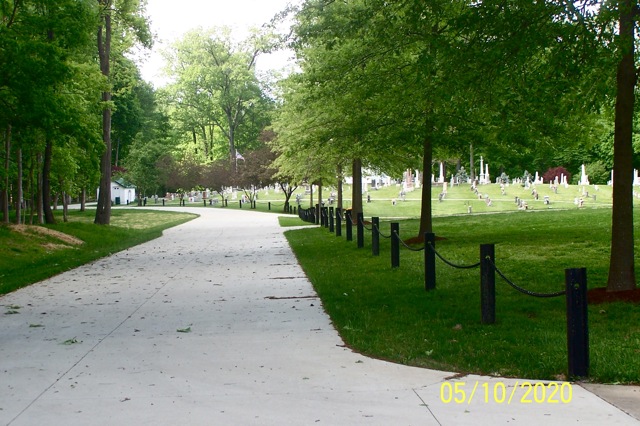
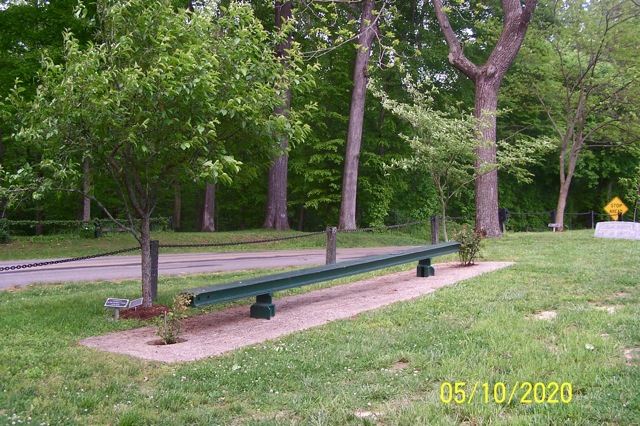
In 2009, 45 various trees were planted at Shiloh. These trees may be memoralized by families in honor of the family or individuals. The railroad rail and chain fence were also extended in 2009. The fence compliments the 2008 paved inner roads of the cemetery. --------------------------------------------------------------------------------------------- In 2008 Mary Linclon and "The Overbeck Strings" came to the annual Shiloh Gathering. The Gathering was held at 1:00 pm EDT on May 25, 2008 at the Meeting House. The Overbeck Strings were led by Edna Peters Overbeck, who is 88. Also there was Martha Overbeck Feldmeyer, Ann Overbeck Fierst, and Darlene Borman Padgett. They specialize in American and British Isles Folk, and Christian hymns. Mary Linclon shared her lifes experiences in and around the White House in the Linclon years. She also held a press conference afterwards. Charlene (Perkins) Schitter protrayed Mary Linclon..
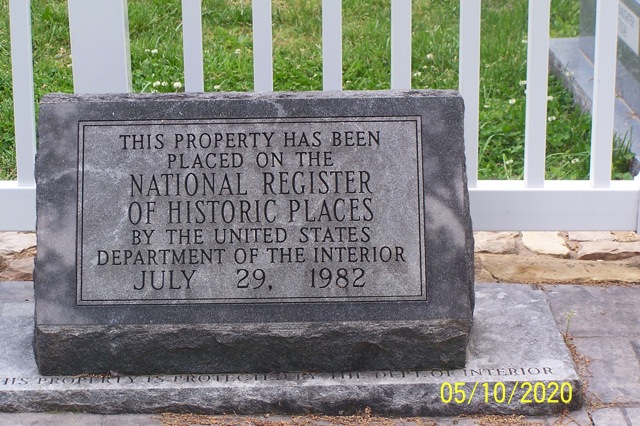
The Shiloh Meeting House and Cemetery were placed on the National Register of Historical Places on July 29, 1982. This placement qualifies Shiloh for protection by the Department of the Interior. Shiloh is a well kept cemetery with no restrictions on who may be buried there. Shiloh is an on-going public cemetery with many plots available. Much time has passed and many boards have presided, however, the beautification of the cemetery and meeting house continues on a timely basis. The present day board consists of: Delbert Himsel, Jr., R.Thomas Kellams, Steve Lindauer (president) Cindy Lindauer (secretary/treasurer), Cheryl Sermersheim, Brian Kellams, Jeff Sermersheim, David Rudolph, and Rev. Don Smith. These are all volunteers Webster says a volunteer is "A person who chooses freely to serve in a capacity without pay". The meeting house has the new (old) look as it proudly sits surrounded by trees on Shiloh Road in Dubois County. The directions to Shiloh are: Go east on Hwy. 56 out of Ireland for approximately 1 1/4 miles to Shiloh Road (a blue state historical marker along the highway precedes Shiloh Road), turn right (south) on Shiloh Road, follow Shiloh Road for approximately 1 1/8 mile, you'll see the meeting house on the right. From Jasper, go west on Hwy. 56 about 3 miles to the historical state marker sign (which precedes Shiloh Road), turn left (south) follow the same directions as above from there. The official 911 county address for Shiloh is: 4060 W. Shiloh Road, Jasper, IN 47546. The reason a lot of the Ireland and Ireland area addresses have Jasper on them simply is: Ireland never did have a rural carrier-and if you don't have a box number at the Ireland Post Office-you will have a "Jasper" address. If you wish an Ireland address, go see the present Ireland Postmaster.
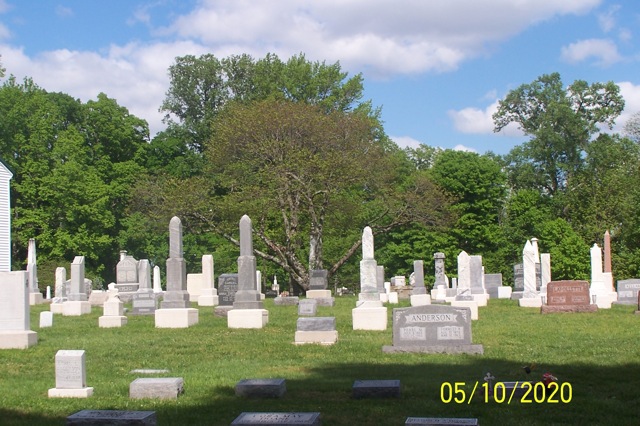
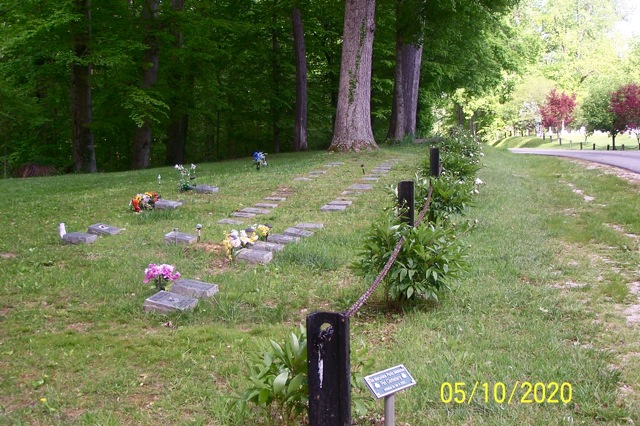
Shiloh also has the destinction of having one of the very few pet cemeteries in the state. Shiloh has land on both sides of Shiloh Road. The pet cemetery is by itself on a small knoll on the north side of Shiloh Road. Shiloh Road divides the Shiloh Cemetery and the Shiloh Pet Cemetery. There is a pet cemetery marker to designate the site. George R. Wilson, famous Dubois County historian, along with *Forrest R. Anderson wrote in 1929 that Shiloh Cemetery was one of the best kept American cemeteries in southwestern Indiana. At that time, in listing in 1929, he indicated that around 1000 persons were at rest at Shiloh, but it seemed not half the graves had stone markers. Not to find a name in the list must not be construed as evidence someone is not buried here. The person may be, but the grave might be unmarked or, if marked, the inscription could not be read at the time. The above is what he wrote in his listing at that time. Forrest R. Anderson worked with Mr. Wilson on many projects in Dubois County, including finding and getting military markers for the Revolutionaly, War of 1812, and Civil War Veterans. Margaret A. Wilson, George's sister, also wrote a detailed history of Shiloh. She presented this history to the Indiana Historical Society in 1929. This history is displayed on the wall of the Shiloh Meeting House as well as many historical photos.
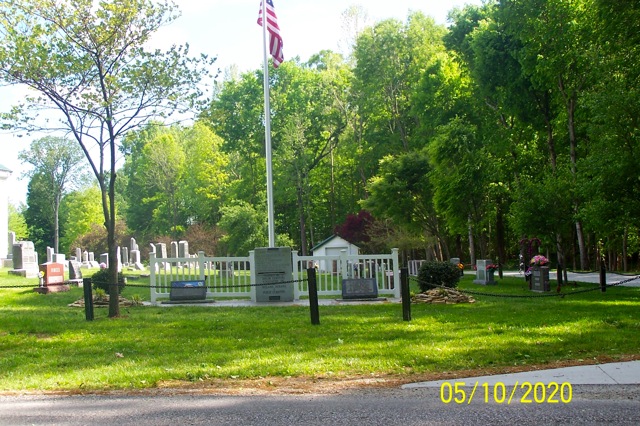
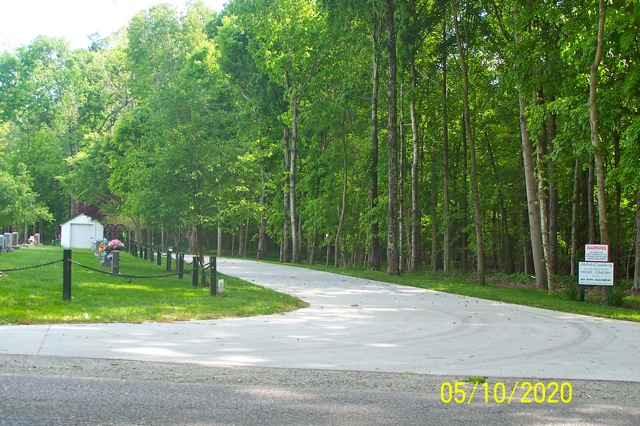
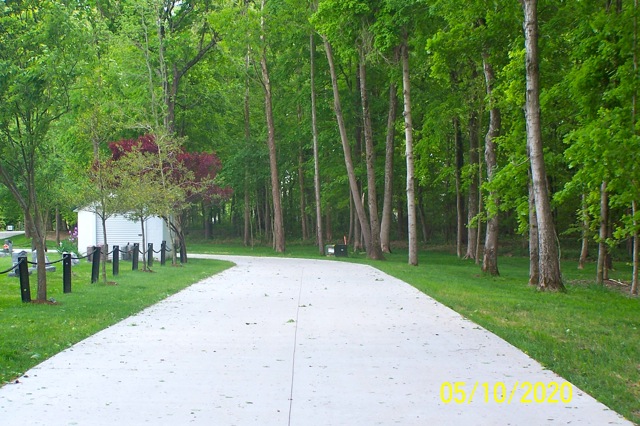
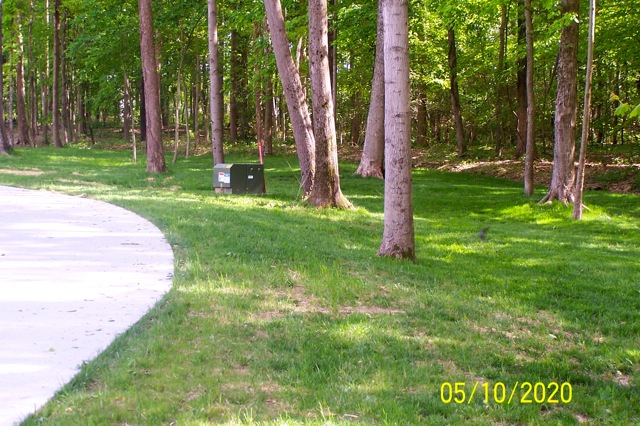
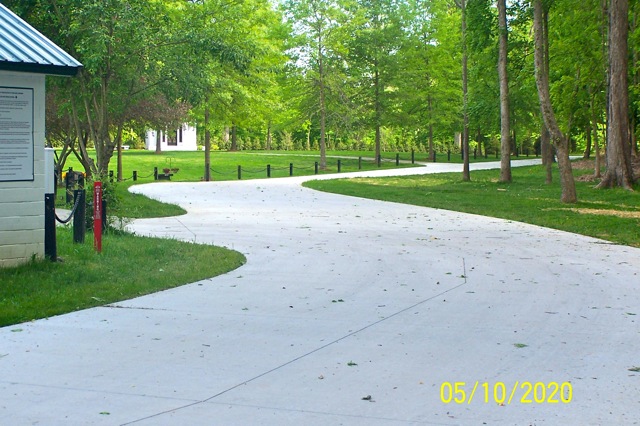
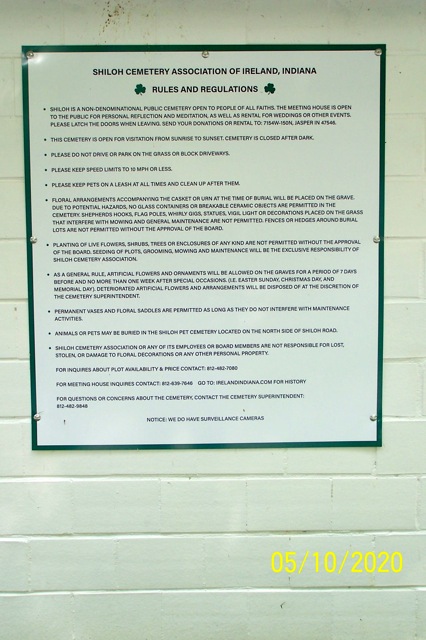
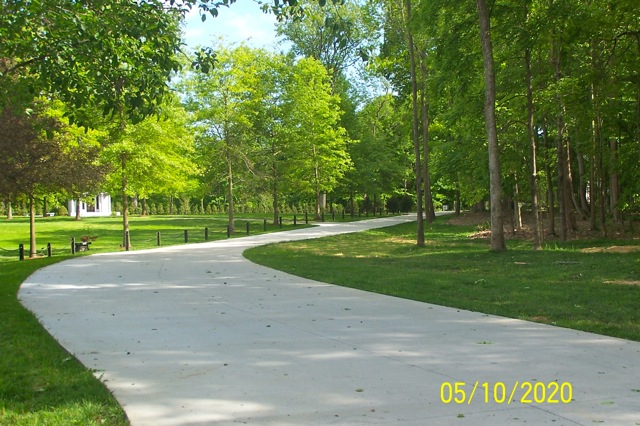
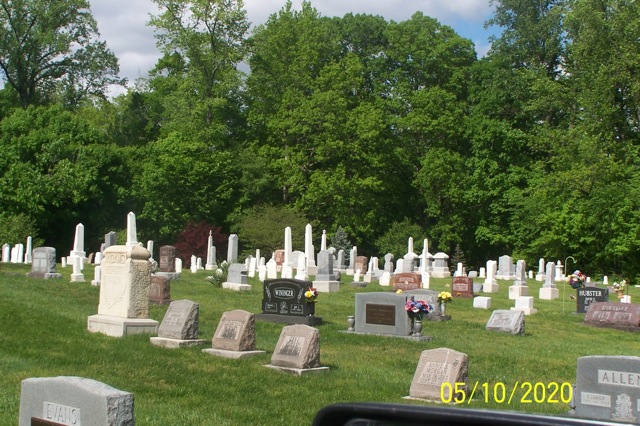
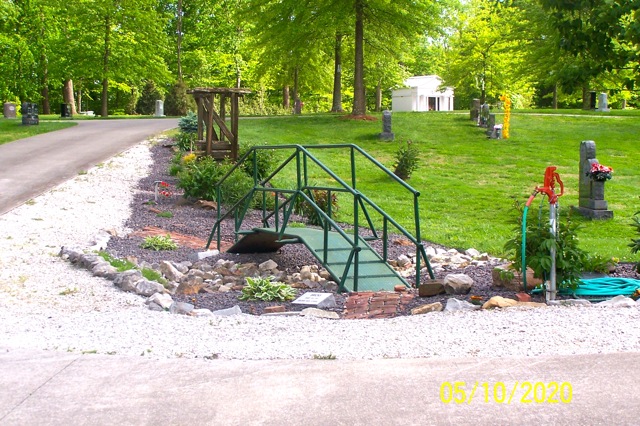
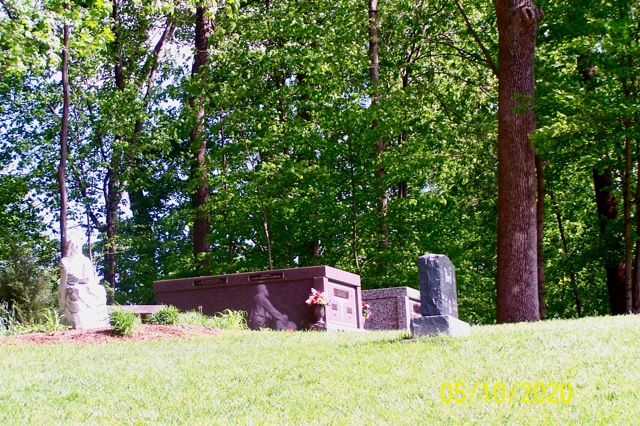
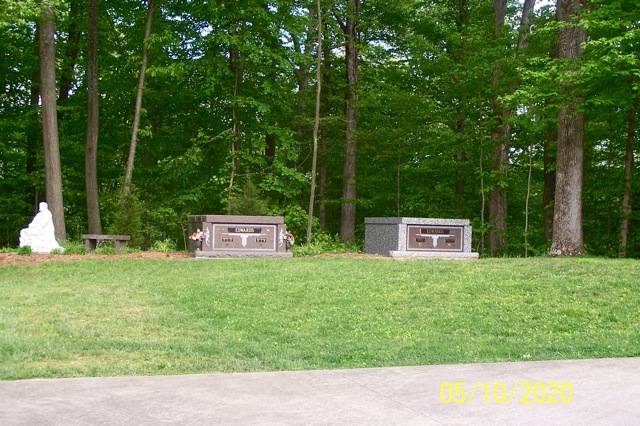
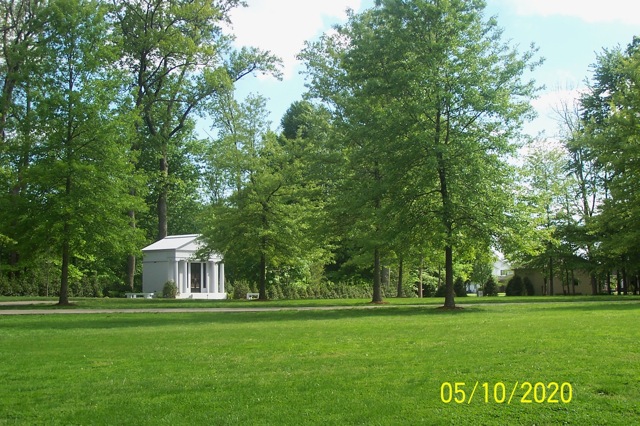
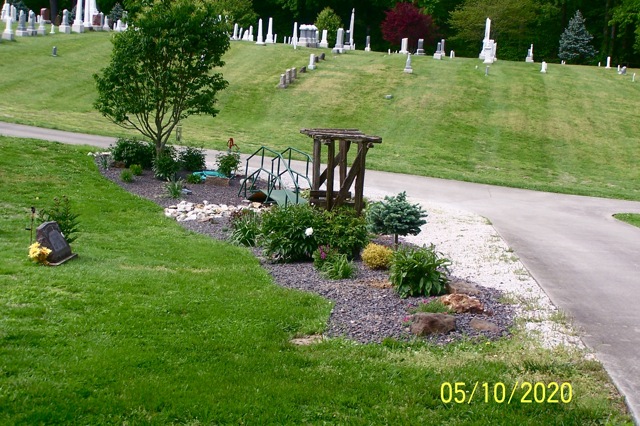
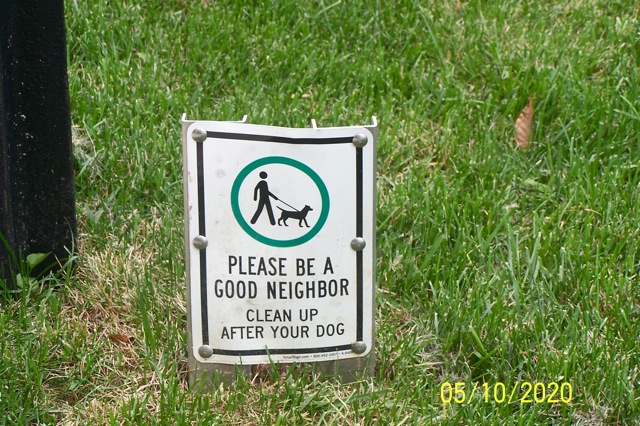
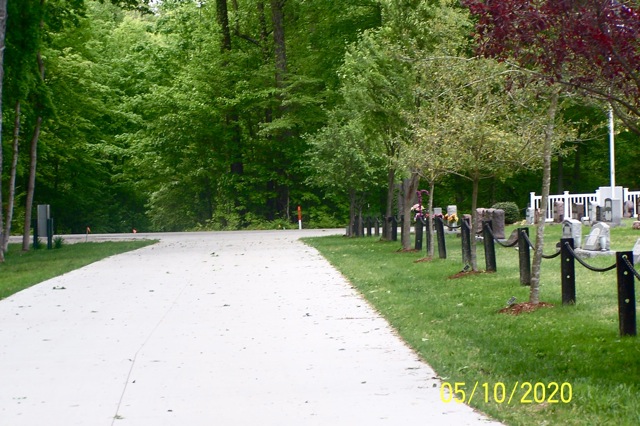
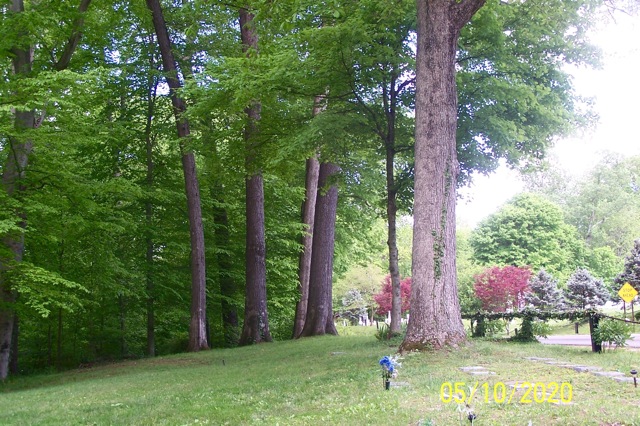
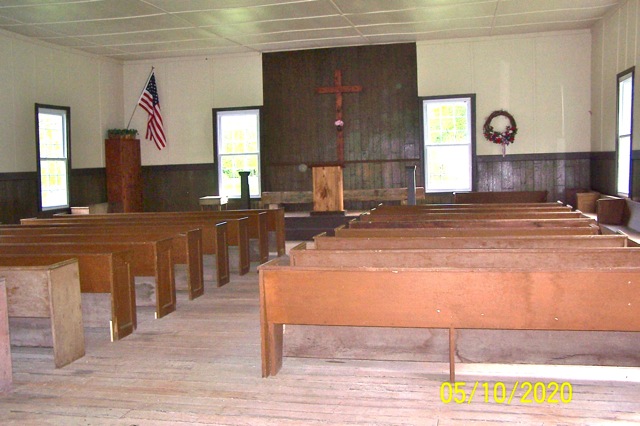
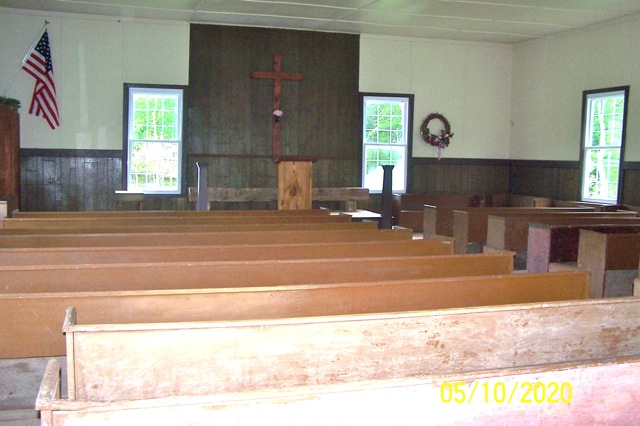
The next listing was done in 1980 by Eugene and Eleanor Gutzweiler, Natalie Baker and Lillian Doane. This listing was included in what is known as the Shiloh book which also contained various histories of Shiloh. This book was compiled in 1982. Another listing of Shiloh Cemetery was done in 2001-2002 with the two-fold purpose of updating the listing and preparing same for a website. This listing was done by Sharon Himsel, MaryAlice Parks and Jane Nelson. This list is an updating of the earlier list done in 1980. George R. Wilson's 1929 list was also used to verify that all graves are included to the best of our knowledge. We also used records from the Dubois County Courthouse and Jasper Courier newspaper clippings to list persons believed to be buried here, but have no stone visible. Only graves with markers are included in the numeration of the stones. In 2005, the Dubois County Geneology Society published an outstanding hard bound book which included another listing of Shiloh. This society located over 40,000 graves in Dubois County. Dubois County GenWeb, from the work of Charles Treadway, has taken pictures of 95% of the grave stones at Shiloh as well as doing another listing of burials. You may click on said link below to see his excellent work. There are many burial sites avaiable at Shiloh, for details email: cherylsermersheim@gmail.com . Cheryl also provides details for the pet cemetery. This alphabetical listing of the burials at Shiloh is as follows: Shiloh Pioneer Cemetery Index For a pictorial view as well as alphabet listing of Shiloh and other Dubois County cemeteries click on: Dubois County Gen Web go to Cemeteries and then to Shiloh Pioneer Cemetery . Special 2020 addition to this site: Shiloh was able to buy the woods on the west side in 2017. Since the road on the west side was just a right-of-way we could not improve the road. In the Spring of 2019, we began to clear the underbrush and the trees that were dangerously leaning towards the cemetery. Once the clearing was done an engineered leveling and grading was instigated to allow proper drainage. Also water and electricity were installed prior to the road improvements. During 2019 the west road was paved. The sides of the road were backfilled and sowed in grass. A modern lighted flagpole was installed and the commemorative veterans display was improved. The chain/railroad rail fence was completed on the south end of the cemetery. Since our 2020 Annual Gathering could not be held due to the Corona 19 Virus, we will show you these following new pictures taken on May 10, 2020 plus some old items also.
LINKS ADAMS, COOPER, DILLIN, GREEN, RITCHEY FAMILIES
|
||||||||||||||||||||||||||||||||||||||||||||||||||||||||||||